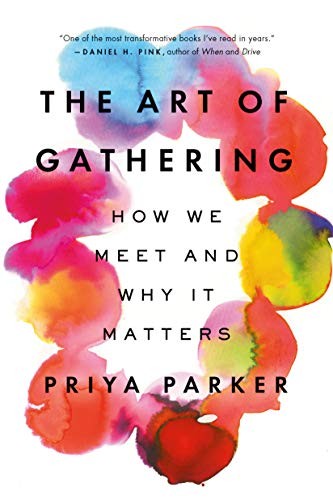
 BOOK NOTES · THE ART OF GATHERING
هنر گردهمایی
01/12
BOOK SUMMARY · MAIN IDEA OF EACH CHAPTER
The Art of Gathering
Intro + 8 chapters + key takeawaysمقدمه + ۸ فصل + نکتههای کلیدی

BOOK SUMMARY · MAIN IDEA OF EACH CHAPTER
A great gathering starts with a real purpose, not a venue or a menu.
We spend much of our lives in meetings, dinners, weddings, and conferences, yet many feel dull or pointless. Parker, a conflict-resolution facilitator, argues that the fix is not better logistics or décor but a focus on people and purpose.
We often gather out of habit and confuse a category (a birthday, a team meeting) with a purpose. Find a specific, disputable purpose, one that someone could disagree with, and let it guide every decision.
A purpose only works if you act on it. Have the courage to exclude people who don't serve it, choose a size that fits the conversation you want, and pick a venue that embodies the purpose.
Hands-off hosting isn't generous; it leaves a vacuum others fill. Use generous authority: protect guests from each other and from bores, equalize them, and connect them, all in service of the group.
Instead of relying on unspoken etiquette, which excludes newcomers, set explicit, one-time rules for the occasion. Clear, playful "pop-up" rules give a diverse group shared norms and make the gathering feel special.
A gathering begins when guests first hear about it, so prime them in advance. Usher them across a threshold, and open with something that grabs attention and honors guests, not announcements and sponsor thanks.
Help guests show up as their real selves rather than their polished résumés. Invite stories and vulnerability, structure the conversation, and make room for people to be seen beyond their titles.
Too much harmony hides what matters. A good host surfaces healthy conflict on purpose, with clear boundaries and safety, so the group can talk about the real issues instead of avoiding them.
Endings deserve design, not a drift into logistics and thank-yous. Give a last call, then close deliberately: look inward to remember what happened, then outward to help guests carry it back into their lives.
The same summary, as swipeable cards.
BOOK NOTES · THE ART OF GATHERINGWe spend much of our lives in meetings, dinners, weddings, and conferences, yet many feel dull or pointless. Parker, a conflict-resolution facilitator, argues that the fix is not better logistics or décor but a focus on people and purpose.
We often gather out of habit and confuse a category (a birthday, a team meeting) with a purpose. Find a specific, disputable purpose, one that someone could disagree with, and let it guide every decision.
A purpose only works if you act on it. Have the courage to exclude people who don't serve it, choose a size that fits the conversation you want, and pick a venue that embodies the purpose.
Hands-off hosting isn't generous; it leaves a vacuum others fill. Use generous authority: protect guests from each other and from bores, equalize them, and connect them, all in service of the group.
Instead of relying on unspoken etiquette, which excludes newcomers, set explicit, one-time rules for the occasion. Clear, playful "pop-up" rules give a diverse group shared norms and make the gathering feel special.
A gathering begins when guests first hear about it, so prime them in advance. Usher them across a threshold, and open with something that grabs attention and honors guests, not announcements and sponsor thanks.
Help guests show up as their real selves rather than their polished résumés. Invite stories and vulnerability, structure the conversation, and make room for people to be seen beyond their titles.
Too much harmony hides what matters. A good host surfaces healthy conflict on purpose, with clear boundaries and safety, so the group can talk about the real issues instead of avoiding them.
Endings deserve design, not a drift into logistics and thank-yous. Give a last call, then close deliberately: look inward to remember what happened, then outward to help guests carry it back into their lives.
Enter your email and confirm that we may store it with the language of this page and the name of this book. We use that to give you the deck and to know which summary you asked for.


