 BOOK NOTES · HOW PEOPLE MATTER
چگونه انسانها اهمیت پیدا میکنند
01/13
BOOK SUMMARY · CHAPTER BY CHAPTER
How People Matter
Introduction + 11 chapters in 9 cards + key takeawaysمقدمه + ۱۱ فصل، در ۹ کارت + نکتههای کلیدی

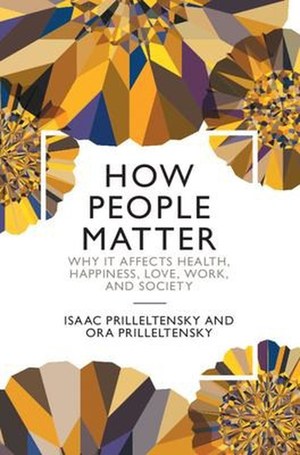
Cover image: Open Library
Read in فارسی
To matter is to feel valued and to add value, to yourself, the people close to you, your work and your community.
Chapter titles follow the Cambridge University Press 2021 edition. No direct quotes; everything is paraphrased.
Mattering = feeling valued + adding value.
It plays out in four domains: self, relationships, work, community.
Balance them: not invisible, not invincible.
Grow your mastery and treat yourself with kindness.
Ask: am I making this person's life better?
Wellness needs fairness: help others matter too.
Isaac Prilleltensky and Ora Prilleltensky's How People Matter: Why It Affects Health, Happiness, Love, Work, and Society (Cambridge University Press, 2021) argues that to matter is to feel valued and to add value, to yourself, to the people close to you, to your work, and to your community. The authors trace depression, disengagement at work, and bitter political division to one root: many people feel they do not matter.
Enter your email and confirm that we may store it with the language of this page and the name of this book. We use that to give you the deck and to know which summary you asked for.
Depression, disengagement at work and bitter political division look like separate problems. The authors argue they share a root: many people feel they do not matter. Some turn that feeling inward, as despair; others overcompensate with grandiosity or join movements that promise them status. The authors blame a "Me Culture" built on the motto that I have the right to feel valued and happy, and they propose a "We Culture" in which everyone has the right and the responsibility to feel valued and to add value.
Mattering has two sides. Feeling valued means being appreciated, respected and recognized. Adding value means making a contribution and a difference. We feel valued by, and add value to, four domains: self, relationships, work and community. The two sides feed each other: appreciation builds confidence and the urge to contribute, while exclusion breeds frustration and makes it harder to be valued. The authors cite the Nun Study, in which nuns whose early life writings held more positive emotion lived years longer.
Feeling valued is a basic need. Being ignored hurts deeply, and repeated exclusion is linked to stress, depression and worse. But being valued is not enough: you also need chances to add value, to help, create and contribute. Giving tends to make people happier and healthier. The healthiest state balances the two, valuing yourself and others, rights and responsibilities. Too little leaves people feeling invisible; an inflated need for value leaves them feeling invincible and entitled.
Mattering can be learned. The authors introduce a set of skills for feeling valued and adding value, and a practical change method they call BET I CAN, designed to help you change your thoughts, emotions and behaviors step by step. The skills are then applied, chapter by chapter, to the four domains of the mattering wheel: self, relationships, work and community.
You can add value to yourself by growing: learning skills, setting goals and building mastery. That meets the need for self-determination. You can feel valued by yourself through self-acceptance and kindness toward your own failures, without sliding into self-obsession. The aim is a steady, balanced regard: not so low that you feel worthless, not so high that you need others to keep confirming your importance.
Love grows when partners, parents, children and friends both feel valued by each other and add value to each other's lives. Small acts of attention, listening, thanks and showing up, tell people they matter. The authors mention Oprah Winfrey recalling her father's wish that every guest in their home feel that they mattered. In close relationships, the question is not only "Am I appreciated?" but also "Am I making this person's life better?"
Many workers feel invisible, and disengagement is widespread. Teams thrive when members are recognized and treated fairly, and when they can see how their work makes a difference. Among the book's examples are Shirin, a low-paid health-care worker who goes beyond her duties with care, and Ronald, a well-paid executive who feels slighted when passed over. Leaders can build mattering by appreciating people and by giving them real chances to contribute.
Contributing to a community gives a sense of belonging. Volunteering, joining local efforts and helping neighbors are ways to add value beyond your own circle. The authors point to people like Muhammad Yunus, who founded the Grameen Bank to lend to the poor in Bangladesh. Communities flourish when people trust each other, take part in civic life and care about more than material success.
Some people are denied the chance to matter because of discrimination and unfair systems. Personal effort cannot fix that alone; it takes collective action and better policies. The authors argue for wellness with fairness: a society where people build skills and resilience, and also get fair opportunities. They call it a mattering revolution, and it begins at home, at work and in the community, whenever you help someone feel valued and add value.
How People Matter was written by Isaac Prilleltensky & Ora Prilleltensky.
Key lessons include: Mattering = feeling valued + adding value.; It plays out in four domains: self, relationships, work, community.; Balance them: not invisible, not invincible.
This summary is for readers who want to matter is to feel valued and to add value, to yourself, the people close to you, your work and your community.
The same summary, as swipeable cards.
BOOK NOTES · HOW PEOPLE MATTERIsaac Prilleltensky and Ora Prilleltensky's How People Matter: Why It Affects Health, Happiness, Love, Work, and Society (Cambridge University Press, 2021) argues that to matter is to feel valued and to add value, to yourself, to the people close to you, to your work, and to your community. The authors trace depression, disengagement at work, and bitter political division to one root: many people feel they do not matter.