 BOOK NOTES · HOW TO WIN FRIENDS
آیین دوستیابی
01/16
BOOK SUMMARY · CHAPTER BY CHAPTER
How to Win Friends and Influence People
4 principle parts (3+6+12+9), in 12 detailed cards + takeaways۴ بخش اصول (۳+۶+۱۲+۹)، در ۱۲ کارت تفصیلی + نکتههای کلیدی

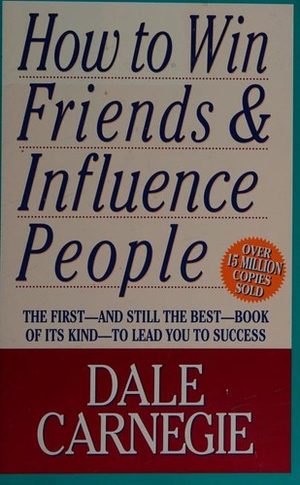
Cover image: Open Library
Read in فارسی
Protect dignity, give sincere appreciation, and align with what people already want.
The cards follow the classic four-part, 30-principle structure of the widely circulated Simon & Schuster revised editions. Extra letters and home-life material in some printings are outside this deck. No direct quotes; everything is paraphrased. The Persian body is Ketabcard’s paraphrase, not a translator’s reprint.
Appreciation and aligning with the other's want beat blame.
Listen and use names before you pitch yourself.
Avoid arguments; get early yeses; let ideas feel shared.
Lead change with praise, face-saving, and easy next steps.
Dale Carnegie's How to Win Friends and Influence People (Simon & Schuster revised editions; first published 1936). Protect dignity, give sincere appreciation, and align with what people already want. One of the books Alex Hormozi says he studies and rereads.
Enter your email and confirm that we may store it with the language of this page and the name of this book. We use that to give you the deck and to know which summary you asked for.
Carnegie opens with three non-negotiables: do not criticize, condemn, or complain; give honest and sincere appreciation; and arouse in the other person an eager want. The section argues that blame hardens resistance, while appreciation and aligning with the other person's motives open cooperation. These three set the ethical floor for every later principle.
The first three of the six ways to make people like you stress sincere interest in the other person, a smile that is not a technique-only mask, and remembering and using names. Carnegie treats a person's name as the sweetest sound to them — a signal of respect that costs little and builds rapport quickly.
Be a good listener and encourage others to talk about themselves; talk in terms of the other person's interests; and make the other person feel important — honestly. Friendship here is framed as attention and dignity, not clever talk about yourself.
The first block of winning people to your way of thinking: the only way to get the best of an argument is to avoid it; show respect for the other person's opinions and never say 'you're wrong'; if you are wrong, admit it quickly and emphatically; and begin in a friendly way. Soft openings beat ego contests.
Get the other person saying 'yes, yes' early; let the other person do a great deal of the talking; let the other person feel that the idea is theirs; and try honestly to see things from the other person's point of view. Influence here is co-ownership of the conclusion, not a hard push.
Be sympathetic with the other person's ideas and desires; appeal to nobler motives; dramatize your ideas; and throw down a challenge. Carnegie treats story, dignity, and competition as tools that move people when logic alone stalls.
Leadership without offense starts by beginning with praise and honest appreciation, calling attention to people's mistakes indirectly, and talking about your own mistakes before criticizing the other person. Correction lands better when dignity is protected.
Ask questions instead of giving direct orders; let the other person save face; and praise the slightest improvement and praise every improvement. Carnegie frames change as something people grow into when status and progress are both visible.
Give the other person a fine reputation to live up to; use encouragement and make the fault seem easy to correct; and make the other person happy about doing the thing you suggest. Leadership closes by shaping identity and lowering the cost of change.
Read as a sequence: handle people without blame, earn liking through attention, win thinking through yeses and empathy, then lead change without crushing face. The book is a practice manual of interpersonal leverage — still principle-based, not a personality cult. Spot-check against your Simon & Schuster edition before locking deck wording; some printings add or drop the letters/home-life appendices.
A practical reading: choose one principle for conflict (avoid argument / admit fault), one for relationship building (listen / remember names), and one for feedback (begin with praise / let them save face). Track what changed in the other person's openness. Carnegie sells repetition over clever novelty.
This package maps the classic four-part principle structure (fundamental techniques; six ways to make people like you; twelve ways to win people to your thinking; nine leadership principles). Later optional sections on letters or home life are not required for the main deck. No invented quotes or statistics; all cards are paraphrases.
How to Win Friends and Influence People was written by Dale Carnegie.
Key lessons include: Appreciation and aligning with the other's want beat blame.; Listen and use names before you pitch yourself.; Avoid arguments; get early yeses; let ideas feel shared.
This summary is for readers who want protect dignity, give sincere appreciation, and align with what people already want.
The same summary, as swipeable cards.
BOOK NOTES · HOW TO WIN FRIENDSDale Carnegie's How to Win Friends and Influence People (Simon & Schuster revised editions; first published 1936). Protect dignity, give sincere appreciation, and align with what people already want. One of the books Alex Hormozi says he studies and rereads.