 BOOK NOTES · READY, FIRE, AIM
آماده، شلیک، هدف
01/13
BOOK SUMMARY · CHAPTER BY CHAPTER
Ready, Fire, Aim
25 chapters in 5 parts / 4 stages, in 9 cards + key takeaways۲۵ فصل در ۵ بخش / ۴ مرحله، در ۹ کارت + نکتههای کلیدی

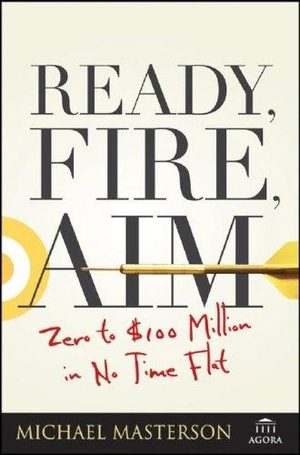
Cover image: Open Library
Read in فارسی
Match your focus to the growth stage — then fire before you over-aim.
The subtitle is part of the book’s title, not a promise of results.
Chapter groupings follow the John Wiley & Sons 2008 edition. The Persian title is Ketabcard’s working title; no translator or Persian publisher is credited. No direct quotes; everything is paraphrased.
Know which growth stage you are in — priorities change at each level.
Stage One: sell the first product before everything else.
Stage Two: break the one-product trap with innovation and speed.
Ready, Fire, Aim: launch, then aim from real market feedback.
Stage Three: become a leader of managers and clear bureaucracy.
Stage Four: act as the company’s main investor.
Michael Masterson's Ready, Fire, Aim: Zero to $100 Million in No Time Flat (John Wiley & Sons, 2008). Match your focus to the growth stage — then fire before you over-aim. The subtitle is part of the book’s title, not a promise of results. One of the books Alex Hormozi says he studies and rereads. The Persian title on this page is Ketabcard’s working title.
Enter your email and confirm that we may store it with the language of this page and the name of this book. We use that to give you the deck and to know which summary you asked for.
Masterson maps a company through four stages — Infancy, Childhood, Adolescence, Adulthood — each with different problems and priorities. Getting to the next level means changing what you optimize for, not only working harder at the old game. Employee tiers are one way he sizes the stages.
In Stage One the supreme job is selling the first product. Find an Optimum Selling Strategy and master a few fundamental selling secrets before you drown in secondary tasks. Without sales, nothing else matters yet.
Stage One founders must own the words that sell — the copy side of the offer — while keeping secondary priorities from stealing the calendar. Masterson closes the infancy section with a review of the stage’s problems, challenges and opportunities.
From roughly one to ten million and beyond, growth means escaping the one-product company. Innovation — new offers and product lines that work — becomes the key to second-stage expansion.
The book’s title method belongs here: get ready enough, fire (launch) before perfection, then aim by improving product and marketing from real market response. Waiting for perfect aim stalls Stage Two.
After you fire, aim the marketing: learn the basics fast, understand buying frenzy dynamics, and apply Ready-Fire-Aim in live examples. Another stage review closes Childhood.
Stage Three demands a transformation from hustling founder to corporate leader who manages managers, fills the company with stars, and communicates vision. The job changes from doing the work to building the people who do it.
Growth creates bottlenecks, bureaucracy and politics. Spotting and clearing them is part of Stage Three leadership, reviewed again at the section’s end.
In Adulthood the last big change is to act as the company’s main investor — allocating capital and attention at the highest level — rather than remaining trapped in earlier-stage operator habits.
Ready, Fire, Aim was written by Michael Masterson.
Key lessons include: Know which growth stage you are in — priorities change at each level.; Stage One: sell the first product before everything else.; Stage Two: break the one-product trap with innovation and speed.
This summary is for readers who want match your focus to the growth stage — then fire before you over-aim.
The same summary, as swipeable cards.
BOOK NOTES · READY, FIRE, AIMMichael Masterson's Ready, Fire, Aim: Zero to $100 Million in No Time Flat (John Wiley & Sons, 2008). Match your focus to the growth stage — then fire before you over-aim. The subtitle is part of the book’s title, not a promise of results. One of the books Alex Hormozi says he studies and rereads. The Persian title on this page is Ketabcard’s working title.