1Love Your Sacred Story
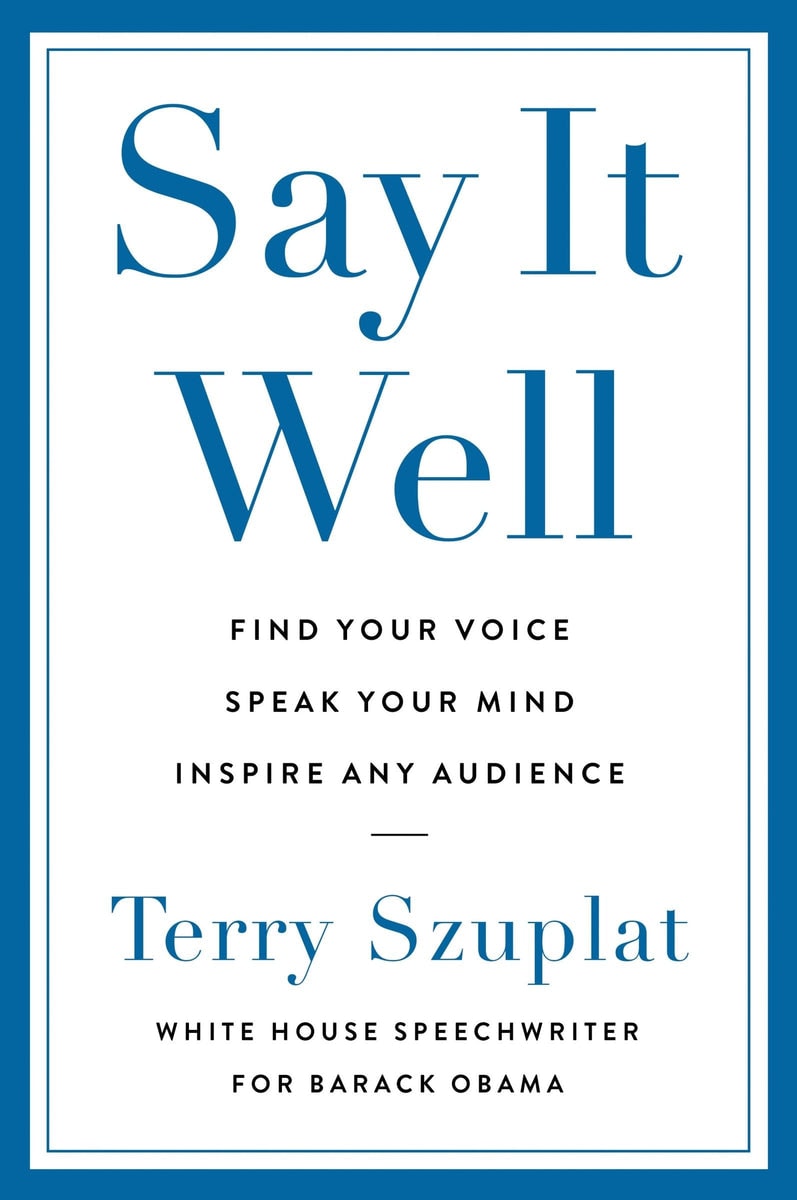
Szuplat, a speechwriter for Barack Obama for eight years, opens by admitting he was terrified of speaking himself, even in a small skit for coworkers. An invitation to give a major speech pushed him to face that fear. He argues that becoming a better speaker starts with believing in yourself. Everyone has a sacred story: the experiences and values that shape us. He recalls that Obama, too, froze early on and learned to speak over time.
2Say What Only You Can Say
The core principle: give the speech only you can give. For each Obama speech, the team asked what he could say that no one else could, drawing on his background and life. Szuplat argues that personal stories make a talk memorable, help avoid generic remarks, and can ease nerves, because you know them best. He cautions against letting AI write personal speeches: a chatbot collects existing text but does not know your life or values.
3What a Speech Really Is
A speech is not an essay, a report, or a press release. Szuplat compares it to a performance, like a play, with a setting, a script, and an audience. Listeners cannot reread what they miss, so it must be written for the ear. You are cast in the lead role, so do not try to sound like someone else, not even Obama. He describes a good talk as a shared experience between speaker and audience, and cites research on neural coupling between brains.
4The 50-25-25 Rule
Do not rush into writing. Szuplat spends about half his preparation time thinking, researching, and outlining, a quarter writing, and a quarter editing and practising, whatever the deadline. He offers ten questions to ask before any speech, about the audience, occasion, setting, and length, and suggests starting with the story you want to tell. Research means finding surprising ideas, small details, and moving stories. He generally recommends writing remarks out in full.
5Have 'em at Hello
The opening sets a first impression, and a long list of thank-yous can drain the room. Szuplat suggests building an emotional connection from the start: a warm hello, a word on why you are there, or a story. Other options include celebrating what the audience loves, a surprising statement, or a greeting in their language. You do not need to open with a joke; light, self-deprecating humour often works better.
6Be a Uniter
Szuplat sees the purpose of a good speech as uniting people around a worthy cause, without demagoguery. He points to three bridges: shared challenges, shared identities, and shared ideas, and to the power of inclusive words like we and our. Choose which of your real identities connects with this audience. In polarised times, he argues, appealing to values the audience already holds, such as freedom, fairness, or family, is one of the most effective ways to persuade.
7Speak from Your Heart
Szuplat warns of the danger of data: piling up statistics can leave audiences sceptical or numb. Research he cites suggests people give more to help one identifiable child than when shown figures about a wider crisis. He argues that to move an audience you must feel something yourself, and that showing genuine emotion, once discouraged, is now widely respected. Human stories about specific people tend to connect more than numbers.
8Talk Like a Human
Drop the jargon, buzzwords, and acronyms. Szuplat's BBQ Rule: if you would not say it at a family barbecue, do not say it in a speech. Talk about real people and outcomes instead of processes, and aim for plain language most listeners understand. Then make it sing: write for the ear, with rhythm, fresh word choices, and refrains. He shows how scripts laid out line by line, and repetition, helped speeches like Obama's after the 2008 New Hampshire primary.
9Truth, Action and Hope
Tell the truth: Szuplat offers ten commandments for accuracy, such as checking facts, crediting sources, and not repeating popular statistics or quotes you cannot trace; admitting flaws can build trust. Turn words into deeds: give the audience a clear, concrete thing to do. And for him there is only one way to end a speech: with hope. Not blind optimism, but acknowledging obstacles while showing a future that is possible and linked to action.
10Stand and Deliver
Editing and rehearsal make a talk better: cut what is not needed, as the team once trimmed an Obama speech by about 15 percent, and practise out loud. Szuplat also covers handling anxiety before you speak, and what to do at the podium, including body language and staying calm. In the epilogue, After the Applause, he suggests reflecting on whether you connected with the audience and how to do even better next time.

 BOOK NOTES · SAY IT WELL