1Motivation
Duhigg treats motivation as a skill you can practise. The key, he argues, is feeling in control: people push harder when they believe their choices shape what happens. He shows how the Marine Corps, under General Charles Krulak, rebuilt boot camp to teach recruits a bias toward action, and how nursing home residents rebelled against small rules. Two moves help: make a choice that asserts control, then ask why the task serves a deeper goal. “Motivation becomes easier when we transform a chore into a choice.”
2Teams
Data scientists at Google spent four years studying how the best teams work, and found that how members treat one another matters more than who is on the team. Good teams shared two habits: everyone spoke in roughly equal measure, and members were skilled at sensing how others felt. Together these build psychological safety, a shared belief that the group is safe for taking risks. Duhigg finds the same pattern in the early writers’ room of Saturday Night Live. Leaders set the tone by listening and inviting every voice.
3Focus
Automation makes attention fragile. Duhigg uses Air France Flight 447 to show cognitive tunneling: under sudden stress, people latch onto the most obvious cue and lose the bigger picture. Reactive habits that help in routine moments can overpower judgment in a crisis. The antidote is building mental models, telling yourself stories about what you expect to see so you notice when reality differs. A crew led by Captain Richard de Crespigny used this habit to bring a badly damaged airliner down safely. Picture your day before it happens.
4Goal Setting
Duhigg argues that we need two kinds of goals. SMART goals (specific, measurable, achievable, realistic and on a timeline), formalised at GE, turn plans into steps, but on their own they can shrink ambition to easy wins and ticked boxes. Stretch goals, aims that seem out of reach, can spark leaps in innovation but can also crush morale. Israel’s leaders before the Yom Kippur War show how a strong urge for closure can lock people onto the wrong aim. “Stretch goals, paired with SMART thinking, can help put the impossible within reach.”
5Managing Others
FBI agents, Duhigg reports, solved a kidnapping with agile methods and a culture of trust shaped by an old auto plant in Fremont, California. A Stanford study of Silicon Valley start-ups found that ‘commitment’ cultures, which hire carefully, train heavily and avoid layoffs, beat star, engineering, bureaucratic and autocratic models; none of the commitment firms studied failed. The lesson: push decisions to the person closest to the problem, and make sure people know the organisation will back them if a reasonable risk does not pay off.
6Decision Making
Many big decisions are really forecasts. Duhigg argues for probabilistic thinking: picture the future as several possible outcomes, some of them contradictory, and estimate how likely each one is. He follows a woman who left a PhD programme for poker and became one of the game’s most successful players by being honest about what she did not know. Bayesian thinking adds a method: start with an assumption, then adjust it as evidence arrives. Because we remember successes and overlook failures, seek out the failures too.
7Innovation
Creativity, Duhigg argues, often comes from mixing proven ideas in new settings. ‘Idea brokers’ carry insights between worlds; West Side Story, he notes, joined old conventions in a fresh way. Near a crushing deadline, the makers of Disney’s Frozen used creative desperation and a well-judged shake-up of the team to find their story. Three lessons follow: treat your own experiences and feelings as material, read stress as a sign that something new may be near, and keep some distance from a fix that worked so it does not crowd out better options.
8Absorbing Data
More data does not automatically mean better decisions. When there is too much, the mind stops taking it in, which Duhigg calls information blindness. The cure is disfluency: doing a little work with information so it sticks, such as turning it into a series of questions, writing it down or explaining it to someone. In Cincinnati’s public schools, he reports, results improved when teachers had to work actively with student data instead of just receiving it. When you meet new information, do something with it.
9A Reader’s Guide to Using These Ideas
In the appendix, Duhigg shows how he applied the ideas to his own overloaded life while writing the book. Facing a pile of email, he typed a quick first sentence into each reply, often one that asserted a choice, and filled in the rest later. He wrote down why each task mattered before starting it, and used the goal, focus and decision ideas on the writing itself. He also cut a story he had spent months on because it did not fit, a reminder to keep distance from your own favourite ideas.

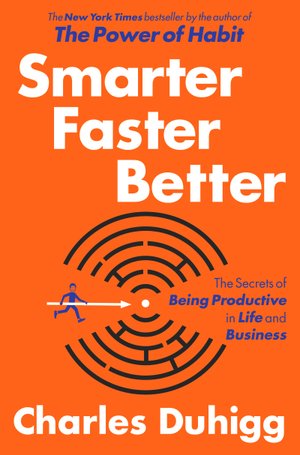
 BOOK NOTES · SMARTER FASTER BETTER