 BOOK NOTES · SOLITUDE
خلوت
01/14
BOOK SUMMARY · CHAPTER BY CHAPTER
Solitude
10 chapters in 10 cards + key takeaways۱۰ فصل، در ۱۰ کارت + نکتههای کلیدی

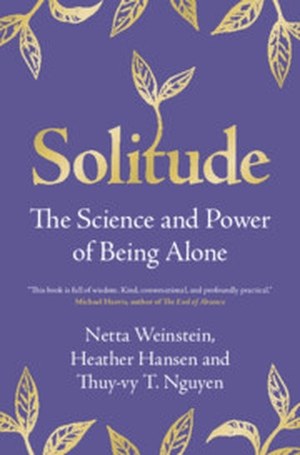
Cover image: Cambridge University Press
Read in فارسی
Time alone is not loneliness. Chosen well, it rests, restores and lets you meet yourself.
Chapter titles follow the Cambridge University Press 2024 edition. No direct quotes; everything is paraphrased.
Solitude is not loneliness; choice makes the difference.
Everyday solitude counts: a walk, a quiet coffee, a drive.
Use your compass: reflect, rest, create or connect.
Balance time alone with time with others.
Nature and inner quiet make solitude restorative.
Being alone well is a skill you can practise.
Netta Weinstein, Heather Hansen, and Thuy-vy T. Nguyen's Solitude: The Science and Power of Being Alone (Cambridge University Press, 2024) argues that time alone is not loneliness. Chosen well, it rests, restores, and lets you meet yourself. Their research is about everyday solitude, such as a walk or a quiet coffee, not only the grand retreat.
Enter your email and confirm that we may store it with the language of this page and the name of this book. We use that to give you the deck and to know which summary you asked for.
We picture solitude as something grand: the monk, the poet in a cabin, Bill Gates on his twice-yearly "think weeks" of reading alone. The authors call that Solitude with a capital S. Their research is about the everyday kind: a walk, a quiet coffee, the drive home. They treat solitude as time when you are not interacting with others and your own experience is at the center of your attention. Everyone has it, and it can be used well or badly.
Solitude comes in more forms than we notice. The authors describe complete solitude, fully alone; private solitude, alone in your own space; companionate solitude, quietly side by side with someone without interacting; and public solitude, alone with your thoughts in a café or on a train. Each can give you a pause from social demands. Recognizing these forms shows how much solitude is already woven into an ordinary day.
Two things make time alone valuable. Autonomy: in solitude you are free to choose what to do, at your own pace, without anyone's expectations. Authenticity: without an audience, you can be who you are rather than who others need you to be. Drawing on self-determination theory, the authors show that when solitude meets these needs, it becomes a source of well-being rather than something to endure.
The authors offer a solitude compass with four directions. North is self-reflection: understanding yourself and your choices. South is rest: calming down and recovering. East is creativity: letting ideas wander and connect. West is peak experiences: rare moments of deep connection to nature or the world. Different people, and the same person on different days, need different directions. Knowing which one you are after helps you use your time alone well.
The same hours alone can feel restful or crushing, and the difference is largely choice. Chosen solitude tends to bring calm and freedom. Solitude imposed on us, from social rejection to the extreme of solitary confinement, brings loneliness and distress. The authors describe how even people forced into time alone fare better when they find a reason to value it. Motivation, wanting the time for its own sake, turns out to be a strong predictor of how well people cope with being alone.
Solitude and connection are not rivals. People do best when they move between them. Too little time alone leaves you drained; too much leaves you lonely. The authors describe "aloneliness", the opposite problem to loneliness: feeling unhappy because you do not get enough time by yourself. The right balance differs from person to person, and the skill is noticing which one you are short of right now.
Time alone in nature has a special power. Natural settings hold our attention gently, a quality psychologists call soft fascination, which lets a tired mind recover. Nature also offers "freedom from": from noise, roles and demands, and "freedom to": to wander, notice and feel part of something larger. The authors describe long solo journeys, such as hikes on the Appalachian Trail, but even a short walk among trees can bring some of the same benefits.
Where and how you spend time alone shapes what it gives you. The authors distinguish outer quiet, a calm place free from interruption, from inner quiet, a mind not crowded with worry or screens. You can have one without the other. They describe people who built personal retreats and routines that suit them. The point is to design your own solitude: a place, a time and an activity that leave you feeling better, not emptier.
Yes. Being alone well is a skill. The authors suggest approaching solitude with the right motivation: choosing it for what it offers rather than escaping into it. Notice how you feel before and after. Start small, and leave the phone behind sometimes so that the time is truly yours. They also offer a checklist for positive solitude, built around choice, purpose and paying attention to your own needs.
What we need from solitude changes as we age. Teenagers use time alone to work out who they are, though too much can tip into isolation. Busy adults often have too little. In later life, solitude can become richer and more peaceful. At every stage, the quality of solitude depends on whether it is chosen and how it is used.
Solitude was written by Netta Weinstein, Heather Hansen & Thuy-vy T. Nguyen.
Key lessons include: Solitude is not loneliness; choice makes the difference.; Everyday solitude counts: a walk, a quiet coffee, a drive.; Use your compass: reflect, rest, create or connect.
This summary is for readers who want time alone is not loneliness. Chosen well, it rests, restores and lets you meet yourself.
The same summary, as swipeable cards.
BOOK NOTES · SOLITUDENetta Weinstein, Heather Hansen, and Thuy-vy T. Nguyen's Solitude: The Science and Power of Being Alone (Cambridge University Press, 2024) argues that time alone is not loneliness. Chosen well, it rests, restores, and lets you meet yourself. Their research is about everyday solitude, such as a walk or a quiet coffee, not only the grand retreat.