 BOOK NOTES · START MAKING SENSE
یافتن معنا
01/13
BOOK SUMMARY · CHAPTER BY CHAPTER
Start Making Sense
9 chapters in 9 cards + key takeaways۹ فصل، در ۹ کارت + نکتههای کلیدی

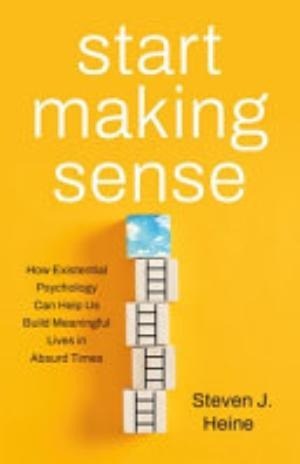
Cover image: Basic Books
Read in فارسی
Meaning is not found once. It is built and repaired, through people, work and something larger than you.
Chapter titles follow the Basic Books 2025 edition. No direct quotes; everything is paraphrased.
Notice when distraction is standing in for meaning.
Write down one value that matters to you, and why.
Your life is a story, and you can help shape what it means.
Feed the pillars: people, contribution, something larger.
Seek new, rich experiences and moments of awe.
When life breaks your story, look for the thread that remains.
Steven J. Heine's Start Making Sense: How Existential Psychology Can Help Us Build Meaningful Lives in Absurd Times (Basic Books, 2025) argues that meaning is not found once. It is built and repaired through people, work, and something larger than you, at a time of more freedom and fewer shared answers.
Enter your email and confirm that we may store it with the language of this page and the name of this book. We use that to give you the deck and to know which summary you asked for.
Modern life gives us more freedom and fewer shared answers about why we are here. Heine argues that instead of facing those questions, many of us reach for quick distractions: shopping, drinking, binge-watching, endless scrolling. They are easy, and they crowd out the slower work of building meaning. He draws on existential philosophers who disagreed sharply, such as Kierkegaard, who saw meaning as a personal, freely chosen commitment, and Camus, who saw no built-in meaning and urged us to live passionately anyway. Weighing such views helps you clarify your own.
Humans are the animal that knows it will die and asks why it exists. Heine traces how our large, self-aware brains, able to picture the distant future, brought a new kind of suffering along with their gifts. He points out that no chimpanzee has been observed to take its own life: despair about meaning appears to be a human burden. The same capacities that create existential anxiety, imagination, language and planning, are also the tools we use to answer it.
We make sense of our lives by turning them into stories, with a beginning, turning points and a direction. A life story links who you were to who you are now and gives your choices a reason. Cultures hand us ready-made stories too: about success, family, faith and what a good life looks like. Everything we meet arrives wrapped in layers of meaning, many of them personal. That means you have some say in what your experiences mean and how they fit together.
Heine describes a sense-making system in the brain. It keeps checking that what we do fits what we believe, and it sounds an alarm when something stops making sense. That alarm feels like unease, the discomfort psychologists call cognitive dissonance, and it pushes us to restore order: by changing our behavior, changing our beliefs, or explaining the mismatch away. Knowing this system exists helps you notice when you are repairing meaning and when you are only covering a crack.
When meaning is threatened, we defend it, often without noticing. We rationalize, see our own lives through rose-colored glasses, and hold on to the belief that the world is basically fair. These defenses protect us, but they can also blind us. A sturdier protection is being grounded: knowing who you are, who matters to you and what you stand for. Heine highlights a simple exercise backed by many studies: writing about a value that matters to you and why.
Freedom is a gift and a weight. Every choice closes other doors, and the more options we have, the more room there is for regret. Our minds work hard after a decision to make it feel right. Heine explores how to live with choices honestly: accepting that no path has everything, owning the commitments you make, and judging a life by whether it fits your values rather than by the options you left behind.
Knowing we will die shapes much of what we do. People soften that knowledge in many ways: belief in an afterlife, leaving a legacy, belonging to something that will outlast them. Heine notes that spiritual and mystical beliefs tend to strengthen people's sense of meaning. For non-believers, there are other routes to the same feeling: moments of awe, such as a night sky, great art or an act of deep goodness, that make us feel part of something vast.
Loss, illness, betrayal or sudden change can break the story we were living. Suddenly the past no longer leads to the future we expected. Rebuilding takes time: finding a new thread that connects who you were with who you are becoming. Heine points to nostalgia as an underrated help. Revisiting old photos, songs or friends reminds us what has stayed constant in us, and research links it to a stronger sense of meaning and connection.
Meaning rests on a few pillars: close relationships and community, work that lets you contribute, and a connection to something larger than yourself. Heine adds two more practices. Seek psychologically rich experiences, new and challenging things that change how you see, from a new cuisine to a year abroad. And recognize your own heroic journey: the obstacles you have already faced and how you got through them. Check which pillar is weak in your life, and start there.
Start Making Sense was written by Steven J. Heine.
Key lessons include: Notice when distraction is standing in for meaning.; Write down one value that matters to you, and why.; Your life is a story, and you can help shape what it means.
This summary is for readers who want meaning is not found once. It is built and repaired, through people, work and something larger than you.
The same summary, as swipeable cards.
BOOK NOTES · START MAKING SENSESteven J. Heine's Start Making Sense: How Existential Psychology Can Help Us Build Meaningful Lives in Absurd Times (Basic Books, 2025) argues that meaning is not found once. It is built and repaired through people, work, and something larger than you, at a time of more freedom and fewer shared answers.