
Cover image: Simon & Schuster
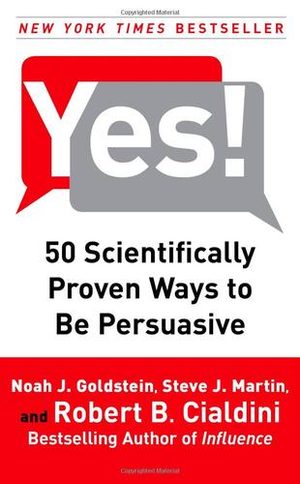
Yes! 50 Scientifically Proven Ways to Be Persuasive Book Summary
Read in فارسی
Tiny wording changes — fifty of them — can unlock a yes.
- 2 min read
- 9 chapters
- 13 slides
Yes! by Goldstein, Martin, and Cialdini. Not Fisher and Ury’s Getting to Yes.
Nine cards group selected ideas from the 50 chapters. This is not an exhaustive review. No direct quotes; everything is paraphrased.
Key takeaways
Show what similar people do; never normalize the bad behavior you want to stop.
Personal, unexpected favors beat generic freebies.
Small, active, public commitments grow into larger ones.
Reveal a minor flaw to raise trust in your strengths.
Loss frames, because, and easy language move small decisions.
Match the appeal to culture: self in individualist settings, group in collectivist ones.
What is this summary about?
Noah J. Goldstein, Steve J. Martin, and Robert B. Cialdini's Yes! 50 Scientifically Proven Ways to Be Persuasive (Free Press / Simon & Schuster, 2008). Tiny wording changes — fifty of them — can unlock a yes. One of the books Alex Hormozi says he studies and rereads.
Download the free summary deck (PDF)
Enter your email and confirm that we may store it with the language of this page and the name of this book. We use that to give you the deck and to know which summary you asked for.
Chapter by chapter
1Social Proof, Done Carefully
Small wording changes can move behavior. Show what similar people already do; do not advertise how common a bad behavior is, or you normalize it. Point people toward a high, visible positive middle instead of shaming them with the crowd’s worst habits.
2Less Choice, Clear Value, Fear with a Path
Too many options can freeze people. Free bonuses need a stated value or they feel cheap. A superior decoy can lift the offer you actually want sold. Fear persuades mainly when a clear next step is attached.
3Give First, and Make It Personal
Personal, unexpected, and tailored favors outperform generic freebies. A second small gift after the first can feel special. Favors age differently for giver and receiver, so remind people of the help in vivid terms when you need support later.
4Small Yeses That Stick
A voluntary small step opens the door to a larger one. Labels, active public yeses, and writing commitments down make them stick. Ask for a little and more people start; fight inconsistency by showing how the new choice fits who they already are.
5Start Low, Let Others Vouch, Welcome Real Dissent
Opening price depends on the setting: a low start can heat auctions with more bidders; a high anchor often helps in negotiations. Let someone else state your credentials. Being the smartest voice in the room can shut learning down. A true dissenter beats a theatrical devil’s advocate. People often learn more from corrected mistakes than from flawless demos.
6Admit a Flaw, Find a Bond
A minor weakness revealed up front can raise trust in your strengths, especially when the flaw has a two-sided reading. Taking responsibility after a miss beats blaming outside conditions. Shared names, places and tastes quietly increase liking.
7Mirror Genuinely, Frame the Loss, Give a Reason
Genuine mirroring builds rapport. Exclusive information feels valuable. Loss frames often beat gain frames. The word because can carry even a light reason for small requests. Make pleasant outcomes easy to imagine — struggling to list many reasons can backfire.
8Easy Names, Rhymes, and Head Starts
Easy names and rhymes feel truer. Contrast makes prices and options look better after a worse anchor. Endowed progress — a head start on a loyalty card — raises completion. Packaging should cue the story your marketing already told.
9Context, Mood, and Culture
Mirrors and watching eyes can nudge honesty. Avoid big negotiations when sad, sleepy, or distracted. Online persuasion needs extra rapport. Individualist and collectivist cultures answer different appeals — self versus group — and even voicemail lands differently across cultures.
What do readers ask about Yes! 50 Scientifically Proven Ways to Be Persuasive?
Who is the author of Yes! 50 Scientifically Proven Ways to Be Persuasive?
Yes! 50 Scientifically Proven Ways to Be Persuasive was written by Noah J. Goldstein, Steve J. Martin, and Robert B. Cialdini.
What are the main lessons in Yes! 50 Scientifically Proven Ways to Be Persuasive?
Key lessons include: Show what similar people do; never normalize the bad behavior you want to stop.; Personal, unexpected favors beat generic freebies.; Small, active, public commitments grow into larger ones.
Who should read Yes! 50 Scientifically Proven Ways to Be Persuasive?
This summary is for readers who want tiny wording changes — fifty of them — can unlock a yes.
What do the Instagram cards look like?
The same summary, as swipeable cards.
The book in brief
Noah J. Goldstein, Steve J. Martin, and Robert B. Cialdini's Yes! 50 Scientifically Proven Ways to Be Persuasive (Free Press / Simon & Schuster, 2008). Tiny wording changes — fifty of them — can unlock a yes. One of the books Alex Hormozi says he studies and rereads.