BOOK NOTES · YOU CAN HEAL YOUR LIFE
شفای زندگی
01/13
BOOK SUMMARY · KEY IDEAS OF EACH PART
You Can Heal Your Life
Introduction + 16 chapters in 4 parts, in 10 cards + key takeawaysمقدمه + ۱۶ فصل در ۴ بخش، در ۱۰ کارت + نکتههای کلیدی

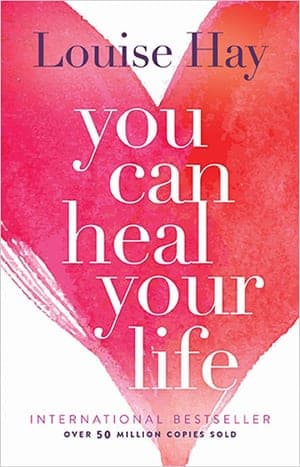
Cover image: Hay House
Read in فارسی
A harsh belief is only a thought, and a thought can be changed.
This summary presents Louise Hay's beliefs about mind and body. It is not medical advice.
One step to try: take one "should" you are carrying today and rewrite it as "could."
Treat a harsh belief as a thought, not a fact.
Swap one "should" for "could."
Trace an old belief back, without blame.
Expect resistance, then act anyway.
Forgiving frees you. It does not excuse what happened.
Practice daily, and kindly, the way a child learns to walk.
Hay opens with a one-page list of her philosophy. In her view, each of us is responsible for our experiences, our thoughts shape our future, and the belief beneath most trouble is some version of "I'm not good enough." Her hopeful point is that this is only a thought, and a thought can be changed. Self-acceptance, she argues, is where real change begins. In her words, "The point of power is always in the present moment."
Enter your email and confirm that we may store it with the language of this page and the name of this book. We use that to give you the deck and to know which summary you asked for.
Hay sees life as simple: what we believe about ourselves and about life tends to become true for us. Someone convinced that people are out to get them will live a different life from someone who expects help. She traces many of these beliefs to childhood, when we absorbed the views of the adults around us. Blaming others, she says, gives our power away, while noticing our own thinking hands it back.
People arrive naming problems with the body, relationships, money, or life. Hay treats these as outer effects of inner thought patterns. In one exercise she asks them to list everything they "should" do, then asks why. She calls should one of the most damaging words, because it implies being wrong, and suggests replacing it with could, which turns an obligation into a choice. Underneath, she says, the real issue is usually a lack of self-love.
Hay asks readers to look at the messages they heard as children about themselves, money, love, and work. She stresses that parents passed on what they themselves were taught and did the best they could with what they knew, so the aim is understanding, not blame. Then comes a simple test: is this belief actually true, or just familiar? A belief that no longer serves you, she writes, can be questioned and let go.
Change starts with a decision and a stated willingness to change. Her affirmation is "I approve of myself and the way I am changing." She compares the work to housecleaning: you look at what is there before deciding what to keep. She expects resistance and lists its signs, such as changing the subject, being late, or procrastinating. Her advice is to notice the resistance and go ahead anyway.
Hay describes three steps: being willing to let go of the need for an old pattern, learning to direct the mind, and forgiving. She treats the mind as a tool you can choose how to use. Forgiveness sits at the center. She argues that holding resentment keeps us tied to the past. She offers exercises for releasing old hurts, including imagining good things happening to the people we resent, and stresses that forgiving does not mean approving of what they did.
What you put your attention on grows, Hay says, so she has readers state what they want in positive, present-tense affirmations, ideally aloud in front of a mirror. Daily practice matters more than perfection. She compares it to a toddler learning to walk: if we scolded toddlers the way we scold ourselves, they would never learn. Gratitude, meditation, exercise, and good food complete the daily routine she describes.
Hay applies one principle to every area of life. In relationships, she suggests the people around us often mirror what we believe about ourselves. At work, she recommends blessing a job you dislike with love and seeing it as a stepping stone to a better one. On success and money, she argues that feeling deserving matters as much as effort, and she encourages gratitude for what you already have.
Hay believes physical problems carry emotional messages, and she walks through the body linking areas to thought patterns. This part closes with a long list, taken from her earlier booklet Heal Your Body, that pairs conditions with what she calls a probable mental cause and a new thought pattern to repeat. These links come from her own work with clients, not from scientific studies. They are her beliefs, not medical fact.
Hay ends with her own life: a childhood of poverty and abuse, leaving home at 15, and years of low self-worth even as a fashion model. At a fourth-grade party, the cake ran out just before her turn; she later read it as her belief that she deserved nothing. She found the Church of Religious Science, became a counselor, and, by her account, met a cancer diagnosis with forgiveness work, therapy, and nutrition alongside medical checks. Her recovery is her own account, not medical evidence.
You Can Heal Your Life was written by Louise L. Hay.
Key lessons include: Treat a harsh belief as a thought, not a fact.; Swap one "should" for "could."; Trace an old belief back, without blame.
This summary is for readers who want a harsh belief is only a thought, and a thought can be changed.
The same summary, as swipeable cards.
BOOK NOTES · YOU CAN HEAL YOUR LIFEHay opens with a one-page list of her philosophy. In her view, each of us is responsible for our experiences, our thoughts shape our future, and the belief beneath most trouble is some version of "I'm not good enough." Her hopeful point is that this is only a thought, and a thought can be changed. Self-acceptance, she argues, is where real change begins. In her words, "The point of power is always in the present moment."