1The Rise and Fall of Motivation 2.0
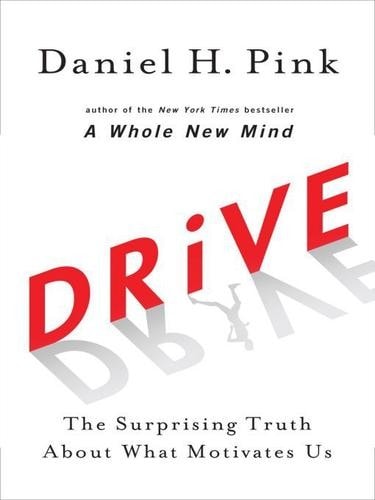
Pink compares motivation to a computer operating system. Motivation 1.0 was about survival. Motivation 2.0, built on rewards and punishments, suited routine industrial work. He argues it fits poorly with today's work, which is increasingly creative and heuristic rather than rule-based, pointing to examples such as Wikipedia and open-source software, built largely by volunteers who were not paid for their contributions.
2Seven Reasons Carrots and Sticks (Often) Don't Work
Pink lists seven ways that if-then rewards can backfire. They can reduce intrinsic motivation, lower performance, crush creativity, and crowd out good behaviour. They can also encourage cheating and shortcuts, become addictive, and push people toward short-term thinking. He draws on studies such as the candle problem, where offering money made people slower at a task that needed creative insight.
3...and the Special Circumstances When They Do
Rewards are not always harmful. For routine, rule-based tasks, Pink says, they can help, especially if you explain why the task matters, acknowledge that it is boring, and let people do it their own way. For creative work, he suggests unexpected rewards given after the fact, praise and useful feedback rather than promised payoffs. Fair, adequate base pay remains essential so that money is not a distraction.
4Type I and Type X
Pink describes two patterns of behaviour. Type X is fuelled mainly by extrinsic desires such as money and status. Type I is fuelled more by the inherent satisfaction of the activity itself. Drawing on self-determination theory, he argues that Type I behaviour tends to bring stronger long-term performance and wellbeing, and that it is learned rather than fixed: people can move toward it.
5Autonomy
The first element is autonomy, our desire to direct our own lives. Pink identifies four areas where it matters: task, time, technique and team, meaning what people work on, when they do it, how they do it and whom they do it with. He describes practices such as Atlassian's FedEx Days, Google's time for side projects, and results-only work environments, where people are judged on outcomes rather than hours.
6Mastery
The second element is mastery, the urge to get better at something that matters. Pink links it to flow, the state of deep focus that comes when a task is neither too easy nor too hard. He sets out three laws of mastery: it is a mindset, since believing ability can grow comes first; it is a pain, requiring effort, grit and deliberate practice; and it is an asymptote, something you can approach but never fully reach.
7Purpose
The third element is purpose, the yearning to do what we do in the service of something larger than ourselves. Pink argues that autonomous people working toward mastery perform best when their work serves a purpose. He describes organizations that treat purpose as seriously as profit, and the way purpose shows up in goals, in the words leaders use, and in policies that let people pursue it.
8The Type I Toolkit
The final part is a practical toolkit. It includes strategies for individuals, such as summing up your life's aim in a single sentence and asking at the end of each day whether you were better than the day before. It offers ideas for organizations, a section on paying people so that money is taken off the table, advice for parents and educators, a reading list, a recap, a glossary and a discussion guide.

 BOOK NOTES · DRIVE