1Why Is Dishonesty So Interesting?
Ariely starts with Enron and a friend who consulted for the company yet never saw the warning signs. He then questions a common view, the Simple Model of Rational Crime, which says people weigh the gain, the chance of being caught and the punishment. A theater gift shop run by kind volunteers kept losing money, and the losses came from many people taking a little, not from one big thief. His question: what really drives everyday dishonesty?
2Testing the Simple Model of Rational Crime
In the matrix task, people solve number puzzles for cash and report their own score. Given the chance, many cheat, but only by a little. Paying more per answer did not raise the cheating, and neither did lowering the chance of being caught; even with a blind supervisor, people cheated about the same. Ariely concludes that a cost-benefit calculation does not explain most dishonesty. Something else sets the limit.
3Fun with the Fudge Factor
Note: the insurance-form study described in this chapter came from a 2012 PNAS paper, retracted in 2021 over evidence questioning its data. Two forces pull at us: we want to benefit, and we want to see ourselves as honest. The fudge factor is the room between them, cheating just enough to gain while still feeling like a good person. That room grows when we are a step away from cash. In a dorm, cans of Coke left in shared fridges disappeared while dollar bills were left alone, and in his tests people lied more for tokens than for money.
4Golf
Golf has no referee, so players judge themselves, much like many of us at work. In a survey of golfers, moving the ball a few inches with a club seemed more acceptable than nudging it with a shoe, and picking it up by hand felt least acceptable. A do-over on the first hole was easier to excuse than one later in the round. And golfers rated other players as more likely to bend the rules than themselves.
5Blinded by Our Own Motivations
Conflicts of interest bend how even honest people see things. Ariely describes a dentist with costly new equipment, and his own time as a paid expert witness, when he soon took on the view of those paying him. In a brain-scan study, people liked art more when it carried the logo of the gallery paying them, while insisting it made no difference. Disclosure did not fix the problem: in a study he describes, advisers who disclosed a conflict gave even more biased advice.
6Why We Blow It When We're Tired
Ariely treats self-control as a resource that wears down with use. People holding a long number in mind were more likely to choose cake over fruit. In his tests, participants who first did a draining writing task cheated more afterward. His advice: expect temptation to win more often late in the day, make hard choices early, and steer clear of tempting situations instead of relying on willpower to resist them.
7Why Wearing Fakes Makes Us Cheat More
We read our own actions to decide who we are. Participants given designer sunglasses and told they were fakes cheated more on later tasks than those told they were genuine. Over a long task, many people cheated a little and then suddenly cheated at every chance, which Ariely calls the what-the-hell effect, like dropping a diet after one slice of cake. One small lie can lower the bar for the next.
8Cheating Ourselves
People who used an answer key to raise a test score went on to predict they would do just as well on a new test without one, even when accurate predictions paid money. Giving them a certificate for the inflated score made the belief stronger. Ariely, who spent a long time in hospital as a teenager after severe burns, also reflects on white lies, including the comforting things his caregivers told him.
9Creativity and Dishonesty: We Are All Storytellers
We often don't know why we choose what we choose, but we are skilled at inventing good-sounding reasons. Ariely admits he once changed his answers on a car-advice website until it recommended the convertible he already wanted. In his studies, more creative people cheated more, while intelligence was not linked to cheating. Creativity helps us tell ourselves a story in which we are still doing the right thing.
10Cheating as an Infection
Dishonesty spreads. When an actor in the room, who seemed to be a fellow student, openly cheated and walked off with the money, other participants cheated more. When the same cheater wore a rival university's shirt, the effect shrank. Ariely's point is that we take cues from our own group, especially from people with authority, and that letting small violations slide can slowly shift what everyone sees as normal.
11Collaborative Cheating: Why Two Heads Aren't Necessarily Better Than One
We often assume teamwork keeps people honest. Ariely finds it can do the opposite. When participants knew a partner would share the reward, they overclaimed more, and more still when only the partner benefited. Close watching stopped the cheating, but once partners had chatted and got to know each other, it came back. Long relationships can blur lines too, as with advisers who grow comfortable recommending what benefits them.
12A Semioptimistic Ending: People Don't Cheat Enough!
The hopeful part: if people were purely rational, they would cheat far more than they do. Big cheaters were rare in his tests; the larger cost came from many people cheating a little. Tests in several countries found similar basic levels of cheating. His suggestions: reminders at the moment of temptation, fewer conflicts of interest, and fresh starts, such as rituals of confession or a new year, that let people reset.

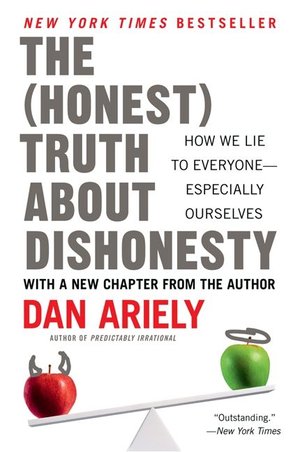
 BOOK NOTES · THE (HONEST) TRUTH ABOUT DISHONESTY