1Two Systems
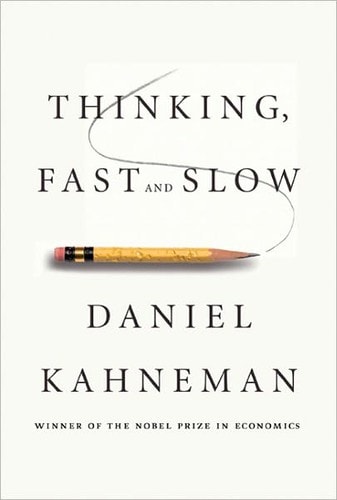
Kahneman, a psychologist who shared the 2002 Nobel Prize in economics, builds on his work with Amos Tversky. He describes the mind with two characters. System 1 runs automatically and fast, with little effort and no sense of control. System 2 does effortful work such as complex calculation and self-control, and it is lazy: in the bat-and-ball puzzle, many people accept the quick wrong answer. A study he cites on willpower, ego depletion, has since had mixed replication results.
2The Associative Machine
System 1 works through associative memory: one idea quickly activates many others. Kahneman presents priming studies, such as words linked to old age affecting walking speed. Many of these priming findings later failed to replicate, and Kahneman himself said he had relied too much on small studies. He also shows that cognitive ease, from repetition or clear print, makes statements feel familiar and true, and that System 1 constantly looks for causes and spots surprises.
3Jumping to Conclusions
System 1 builds the most coherent story from whatever information is at hand and ignores what is missing. Kahneman calls this WYSIATI: what you see is all there is. It fuels the halo effect, where one good trait colours our whole impression. When a question is hard, System 1 often swaps in an easier one and answers that instead, a process he calls substitution. Asked how happy we are with life, we may answer how we feel right now.
4Small Numbers, Anchors and Availability
We trust small samples too much and see patterns in chance. Anchoring means an arbitrary number shifts our estimates: in one experiment, a rigged wheel of fortune that stopped at 10 or 65 changed people's guesses about African nations in the UN. The availability heuristic judges how common something is by how easily examples come to mind. Vivid media coverage can then inflate fears of rare risks, sometimes in self-feeding availability cascades.
5Stories Beat Statistics
We judge probability by resemblance to a stereotype and neglect base rates, as in the Tom W problem. In the Linda problem, many people rate feminist bank teller as more likely than bank teller, a conjunction fallacy. Causal stories move us more than statistics. Regression to the mean explains why flight instructors thought punishment works: extreme performances tend to be followed by more average ones. To predict better, start from the base rate and adjust moderately.
6The Illusion of Understanding
We tell neat stories about the past, the narrative fallacy, and hindsight makes outcomes look inevitable, so we judge decisions by their results. Kahneman describes the illusion of validity: as a young officer he kept trusting his assessments of soldiers even after learning they barely predicted success, and many investors feel skilled despite weak evidence. Drawing on Paul Meehl, he shows that simple formulas often match or beat expert judgment.
7When to Trust Intuition
With psychologist Gary Klein, Kahneman concludes that expert intuition can be trusted when the environment is regular enough to learn and the expert has had long practice with quick feedback. Otherwise, confidence is not a sign of accuracy. The planning fallacy makes us underestimate time and cost, so take the outside view: look at how similar projects turned out. Optimism drives entrepreneurs, and a premortem helps teams spot risks early.
8Prospect Theory and Loss Aversion
Classic utility theory, going back to Bernoulli, judges outcomes by final wealth. Prospect theory, which Kahneman and Tversky published in 1979, says we judge gains and losses relative to a reference point, with diminishing sensitivity as amounts grow. Loss aversion means losses loom larger than equal gains, often by about one and a half to two and a half times. It helps explain the endowment effect: we value things more once we own them.
9Risk, Rare Events and Framing
The fourfold pattern: we overweight small probabilities, the possibility effect, and value certainty, so we buy both lottery tickets and insurance. We avoid risk with likely gains but gamble to escape likely losses. Vivid rare events get extra weight. Kahneman suggests broad framing and risk policies instead of judging each choice alone, and warns of mental accounting and sunk costs. Framing matters: the same facts described as survival or mortality lead to different choices.
10Two Selves
The experiencing self lives each moment; the remembering self keeps score and makes our choices. Memory follows the peak-end rule and neglects duration: in the cold-hand experiment, many people chose to repeat a longer trial because it ended less painfully. We treat life as a story, judged by its key moments and ending. Kahneman separates moment-to-moment well-being from life satisfaction, and warns of the focusing illusion: whatever we think about seems more important than it is.

 BOOK NOTES · THINKING, FAST AND SLOW