 BOOK NOTES · IKIGAI
ایکیگای: راز ژاپنیها در داشتن عمری طولانی و زندگی شاد
01/15
BOOK SUMMARY · CHAPTER BY CHAPTER
Ikigai
Prologue + 9 chapters + epilogue, in 11 cards + key takeawaysپیشگفتار + ۹ فصل + پایانسخن، در ۱۱ کارت + نکتههای کلیدی

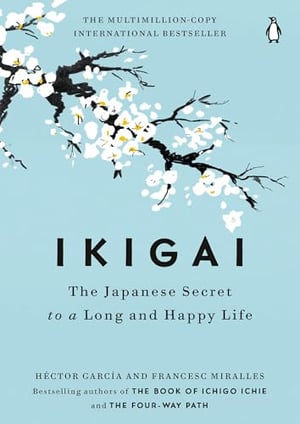
Cover image: Penguin
Read in فارسی
Purpose, flow, food, movement and community, from the village with the longest lives.
Chapter titles follow the English Penguin edition (tr. Heather Cleary). Health and diet claims are the authors' own; read the full book for their sources.
Your ikigai is your reason to get up in the morning.
Stay active and keep doing what you love, at any age.
Do one thing at a time and let yourself get absorbed.
Eat until about 80 percent full, and move a little every day.
Keep close friends and a community that looks out for you.
Accept imperfection, live in the moment, and give thanks.
Héctor García and Francesc Miralles's Ikigai: The Japanese Secret to a Long and Happy Life (2016) visits Ogimi, an Okinawan village known for long lives. The authors argue that a clear reason for living, an ikigai, together with flow, light varied eating, gentle daily movement, close community and resilience, is what keeps its people healthy and happy into old age.
Enter your email and confirm that we may store it with the language of this page and the name of this book. We use that to give you the deck and to know which summary you asked for.
The book began when the two authors, one in Tokyo and one in Barcelona, met and started talking about logotherapy and the search for meaning. The word ikigai, roughly "the happiness of always being busy," kept coming up. They link it to the long lives of people on Okinawa, especially in Ogimi, the "Village of Longevity," and travel there to interview its oldest residents.
Everyone has an ikigai, a reason to get up in the morning, though some are still looking for it. Many Japanese people never fully retire; they keep doing what they love while health allows. The authors draw on the Blue Zones, the five regions where people live longest, and on Okinawan habits such as hara hachi bu, eating until about 80 percent full, and the moai, a close group of friends who support each other.
Small things add up. The authors argue that an active mind, kept busy with new challenges and learning, helps the brain stay young. In their view, sustained, intense stress wears the body down, while a little challenge can be healthy; too much sitting ages us; and enough sleep matters: they suggest seven to nine hours. A positive, calm attitude toward life is part of the same picture.
Viktor Frankl's logotherapy helps people find reasons to live, and Frankl's own survival in the camps showed how much a purpose can carry us. The authors set it beside Morita therapy from Japan, which teaches accepting feelings rather than fighting them and then acting on what needs doing. Both point to the same mission: find your ikigai, then have the courage to stay on that path.
Drawing on Mihaly Csikszentmihalyi, the authors describe flow: being so absorbed in a task that time disappears. Three strategies help. Choose a task that is challenging but not beyond you, have a clear and concrete goal, and concentrate on one thing at a time, since multitasking makes flow impossible. They point to Japanese craftspeople, the takumi, as masters of this kind of focus, and suggest even routine chores can become small moments of flow.
Before Okinawa, the authors gather the outlook of a few supercentenarians, people who lived to 110 or beyond. Their answers are strikingly simple. Japan's Misao Okawa, who lived to 117, credited eating sushi and sleeping. Others speak of keeping mind and body busy, staying curious and not worrying too much. The common thread is a steady, unhurried interest in life.
In Ogimi the authors find a community where everyone they interviewed keeps a vegetable garden and belongs to a neighborhood association. People celebrate often, even small things, with music and dance. They help each other through yuimaaru, the sense of connection between people. They have a purpose but don't take it too seriously, and they stay busy with tasks that let them relax.
The authors describe the Okinawan diet as a wide variety of foods, much of it vegetables, tofu and sweet potatoes, with a rainbow of colors on the plate. In their account, Okinawans eat far less sugar and salt than average and follow hara hachi bu, stopping before they feel full. The authors also highlight green tea and the shikuwasa, a local citrus fruit, as foods they consider rich in antioxidants.
According to the authors, the longest-lived people don't do intense workouts; they move a little every day. The chapter introduces gentle practices from the East: radio taiso, the short group exercise routine common in Japan, plus yoga, tai chi and qigong, with simple sequences such as the Sun Salutation. The authors also stress breathing well as part of living longer.
Life brings setbacks, and the goal is to face them without letting stress age us. The authors borrow from Buddhism and Stoicism: imagine the worst that could happen, focus on what you control, and accept that everything is impermanent. Wabi-sabi finds beauty in imperfection, and ichi-go ichi-e reminds us each moment happens once. They close with Nassim Taleb's antifragility: becoming stronger through challenges.
Everyone's ikigai is different, but we are all searching for meaning. Follow your curiosity, move toward what you enjoy and away from what you dislike, and don't worry too much about finding the perfect answer. The book closes with ten rules from Ogimi, including stay active and don't retire, take it slow, surround yourself with good friends, give thanks, live in the moment and follow your ikigai.
Ikigai was written by Héctor García & Francesc Miralles.
Key lessons include: Your ikigai is your reason to get up in the morning.; Stay active and keep doing what you love, at any age.; Do one thing at a time and let yourself get absorbed.
This summary is for readers who want purpose, flow, food, movement and community, from the village with the longest lives.
The same summary, as swipeable cards.
BOOK NOTES · IKIGAIHéctor García and Francesc Miralles's Ikigai: The Japanese Secret to a Long and Happy Life (2016) visits Ogimi, an Okinawan village known for long lives. The authors argue that a clear reason for living, an ikigai, together with flow, light varied eating, gentle daily movement, close community and resilience, is what keeps its people healthy and happy into old age.