 BOOK NOTES · SIDDHARTHA
سیذارتا
01/16
BOOK SUMMARY · A NOVEL IN 12 CHAPTERS
Siddhartha
Part One + Part Two, 12 chapters in 12 cards + key takeawaysبخش یکم + بخش دوم، ۱۲ فصل در ۱۲ کارت + نکتههای کلیدی

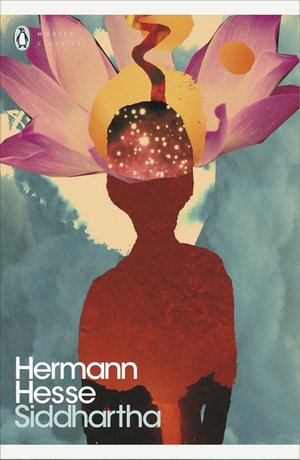
Cover image: Penguin
Read in فارسی
A young seeker leaves every teacher behind and learns, at last, from a river.
This summary tells the whole story, including the ending. Read the full book for Hesse's language and the story's depth.
No teacher can hand you what you must live yourself.
Running from yourself is not the same as finding yourself.
Thinking, waiting and patience are real strengths.
Comfort can slowly empty a life; notice when your inner voice goes quiet.
Listen more than you speak, as Vasudeva does.
Love without holding on: each person walks their own path.
Hermann Hesse's Siddhartha: An Indian Novel (1922) follows a young seeker who leaves every teacher behind and learns, at last, from a river. He leaves his father, the ascetics and even the Buddha. In the end, a river and a quiet ferryman teach him what no teacher could: wisdom cannot be taught and must be found through his own lived experience, from the forest and the city to the river.
Enter your email and confirm that we may store it with the language of this page and the name of this book. We use that to give you the deck and to know which summary you asked for.
Siddhartha grows up in ancient India as the gifted son of a Brahman priest, admired by his parents and followed everywhere by his friend Govinda. Yet the rituals and teachings leave him restless: his teachers know a great deal, but none seems to live in peace. When wandering ascetics pass through town, he decides to join them. His father refuses, and Siddhartha stands silently in the room all night until, at dawn, his father lets him go.
With Govinda, he lives for about three years among the Samanas: fasting, standing in sun and rain, slowing his breath, emptying himself of desire. He masters every exercise, but each escape from the self ends with a return to it. He tells Govinda that this brief numbing is not so different from what a cart driver finds in a bowl of rice wine, and that the oldest Samana has not reached peace after sixty years.
The two friends travel to hear Gotama, the Buddha. Siddhartha is deeply moved by his calm and believes he is truly enlightened. Govinda joins the Buddha's order; Siddhartha does not. He tells the Buddha that what happened in the hour of enlightenment cannot be handed over through teachings, so he must find his own way. The Buddha warns him, kindly, to beware of too much wisdom.
Walking away alone, Siddhartha realizes he has spent years running from himself while claiming to search for himself. He decides to learn from his own life instead of from teachers. Suddenly the world looks new: the blue of the sky, the river, the forest are no longer illusions to see through but things to look at and love. He also feels, for the first time, how alone he is, and walks on, no longer heading home.
A ferryman carries him across a river for free, saying everything comes back. In the city, Siddhartha meets Kamala, a celebrated courtesan, and asks her to teach him love. She tells him he will need fine clothes and money. Asked what he can offer, he answers that he can think, wait and fast, and he believes these quiet skills let a person reach a goal the way a stone sinks through water. In the Project Gutenberg English translation: "I can think. I can wait. I can fast."
Kamala sends him to Kamaswami, a rich merchant. Siddhartha does well because he stays calm: when a rice deal falls through, he spends days with the villagers anyway and calls the trip a success. He treats business as a game and watches people chase money and small pleasures with a mix of affection and distance. With Kamala he learns love, and she understands him better than anyone.
Over many years, the habits of the city seep in: wealth, wine, a house and gardens, and above all gambling with dice. He grows tired, greedy and bored, and the inner voice that once guided him falls silent. One night he dreams that Kamala's rare songbird lies dead in its golden cage. He wakes in deep sadness, leaves the city that same night and never returns.
The novel describes a moment of despair. If you are struggling, please reach out to someone you trust or a local crisis line. Sick of himself, he reaches the same river and leans over the water, wishing to let himself fall. From somewhere inside him the sacred word Om sounds, and he recognizes his own despair. He falls into a deep sleep and wakes renewed. A passing monk has watched over him as he slept: it is Govinda, who does not recognize his old friend at first.
Siddhartha asks the old ferryman, Vasudeva, to take him on as a helper. Vasudeva is a man of few words but a rare listener, and he teaches Siddhartha to listen to the river. Over the years Siddhartha comes to feel that the river is everywhere at once, at its source and at its mouth, and that for it there is only the present. He looks at his own life the same way.
Kamala, travelling to see the dying Buddha with her young son, is bitten by a snake near the river and dies in Siddhartha's hut, after telling him the boy is his. Siddhartha tries to win the proud, spoiled boy with patience. Vasudeva gently asks whether that patience is itself a kind of chain. The boy runs away, and Siddhartha, who once left his own father, now feels a father's pain.
The wound of his son stays open. Vasudeva sits him by the river and tells him to listen better. In the water Siddhartha sees his father, himself and his son, each longing and suffering, merging into one flowing stream of joy and sorrow, good and bad. Heard all together, the many voices become a single word: Om. His struggle ends. Vasudeva, seeing it, goes off into the forest.
Old Govinda, still searching, comes to the ferryman. Siddhartha tells him that searching means having a goal, while finding means being free and open. Knowledge can be passed on, he says, but wisdom cannot; every truth put into words is one-sided. He picks up a stone and says he loves it as it is. When Govinda kisses his forehead, he sees what words could not give him. In the Project Gutenberg English translation: "Knowledge can be conveyed, but not wisdom."
Siddhartha was written by Hermann Hesse.
Key lessons include: No teacher can hand you what you must live yourself.; Running from yourself is not the same as finding yourself.; Thinking, waiting and patience are real strengths.
This summary is for readers who want a young seeker leaves every teacher behind and learns, at last, from a river.
The same summary, as swipeable cards.
BOOK NOTES · SIDDHARTHAHermann Hesse's Siddhartha: An Indian Novel (1922) follows a young seeker who leaves every teacher behind and learns, at last, from a river. He leaves his father, the ascetics and even the Buddha. In the end, a river and a quiet ferryman teach him what no teacher could: wisdom cannot be taught and must be found through his own lived experience, from the forest and the city to the river.