 BOOK NOTES · THE END OF TRAUMA
پایان تروما
01/13
BOOK SUMMARY · CHAPTER BY CHAPTER
The End of Trauma
Introduction + 10 chapters in 9 cards + key takeawaysمقدمه + ۱۰ فصل، در ۹ کارت + نکتههای کلیدی

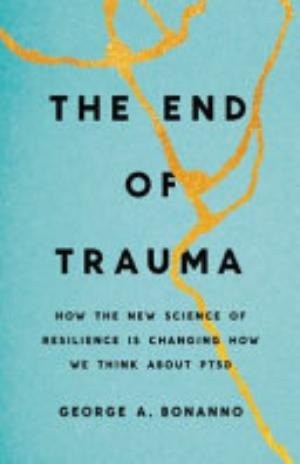
Cover image: Basic Books
Read in فارسی
Most people are resilient after terrible events. The key is not toughness but flexibility.
Not a substitute for professional care.
Chapter titles follow the Basic Books 2021 edition. Not a substitute for professional care. No direct quotes; everything is paraphrased.
Resilience is the most common response to hard events.
A hard event is potentially traumatic, not automatically so.
No single trait predicts who will cope.
Build the mindset: optimism, coping confidence, challenge.
Read the context, pick a strategy, check if it works.
Talk yourself through it, calmly and with some distance.
George A. Bonanno's The End of Trauma: How the New Science of Resilience Is Changing How We Think About PTSD (Basic Books, 2021) argues that most people are resilient after terrible events. The key is not toughness but flexibility. Across dozens of studies, on average about two-thirds showed a fairly stable path of healthy functioning.
Enter your email and confirm that we may store it with the language of this page and the name of this book. We use that to give you the deck and to know which summary you asked for.
We often assume that a terrible event, such as an assault, a disaster or a serious accident, will leave lasting damage. Bonanno, a clinical psychologist who has studied loss and trauma for decades, argues that the evidence says otherwise. He follows people through their own experiences, including Jed, who lost a leg in an accident and recovered far better than anyone expected. The question of the book is not why people break, but how most of them do not.
PTSD became an official diagnosis in 1980, after years of advocacy for Vietnam veterans. It was a real advance: suffering that had been dismissed was finally recognized. But over time the idea spread that trauma almost always damages people, and that anyone who seems fine is in denial. Bonanno traces how the concept grew and why treating every frightening event as automatically traumatic can make it harder to see how people actually respond.
When researchers tracked people over time after potentially traumatic events, a clear pattern appeared. Across dozens of studies, on average about two-thirds showed resilience: a fairly stable path of healthy functioning, perhaps with a few hard days or weeks. Others struggled and gradually recovered, and a smaller group developed lasting problems. Resilience is not rare or heroic. It is the most common outcome.
An event is only potentially traumatic: the same experience lands very differently on different people. Researchers have found many traits linked to resilience, such as certain personality traits, support from others, money and education, and positive emotions. Yet each one predicts very little on its own, so no one can say in advance who will cope. Bonanno calls this the resilience paradox. The reason is that situations vary and every coping strategy has costs as well as benefits.
If no single trait guarantees resilience, what helps? Bonanno describes a flexibility mindset built from three linked beliefs: optimism that things can get better, confidence in your own ability to cope, and a habit of seeing a threat as a challenge you can work on. None of these means pretending things are fine. Together they give you the motivation to keep looking for what works.
The three beliefs of the flexibility mindset feed each other. Optimism makes it easier to believe you can cope; confidence makes a threat feel like a challenge; seeing a challenge invites action, and small successes renew optimism. Bonanno shows that the mindset is not a fixed personality type. It is a working combination that can be strengthened, and it matters most because it gets you to try, notice and adjust.
Flexibility works as a sequence you can repeat. First, read the context: what is happening, and what does this moment demand? Second, pick a strategy from your repertoire, for example expressing emotion or holding it back, seeking support or getting distance. Third, monitor feedback: is it working? If not, adjust and try another. No strategy is good everywhere. Expressing feelings can help at home and backfire at work. Getting better at each step is a skill you can practice.
In hard moments, the way we talk to ourselves matters. Bonanno describes how people quietly coach themselves through the flexibility sequence: what is going on here, what can I do, is it helping? Speaking to yourself calmly, with a little distance, can turn panic into problem-solving. This inner conversation is something most resilient people do without thinking, and something anyone can learn to do on purpose.
Bonanno finished the book as COVID-19 spread. The pandemic was an unusual test: a long, uncertain threat that touched almost everyone at once. Early research summarized in the book showed a familiar pattern, with most people holding up reasonably well despite real distress. The lesson carries over to any long crisis: keep reading the situation, keep trying strategies, and keep adjusting as conditions change.
The End of Trauma was written by George A. Bonanno.
Key lessons include: Resilience is the most common response to hard events.; A hard event is potentially traumatic, not automatically so.; No single trait predicts who will cope.
This summary is for readers who want most people are resilient after terrible events. The key is not toughness but flexibility.
The same summary, as swipeable cards.
BOOK NOTES · THE END OF TRAUMAGeorge A. Bonanno's The End of Trauma: How the New Science of Resilience Is Changing How We Think About PTSD (Basic Books, 2021) argues that most people are resilient after terrible events. The key is not toughness but flexibility. Across dozens of studies, on average about two-thirds showed a fairly stable path of healthy functioning.